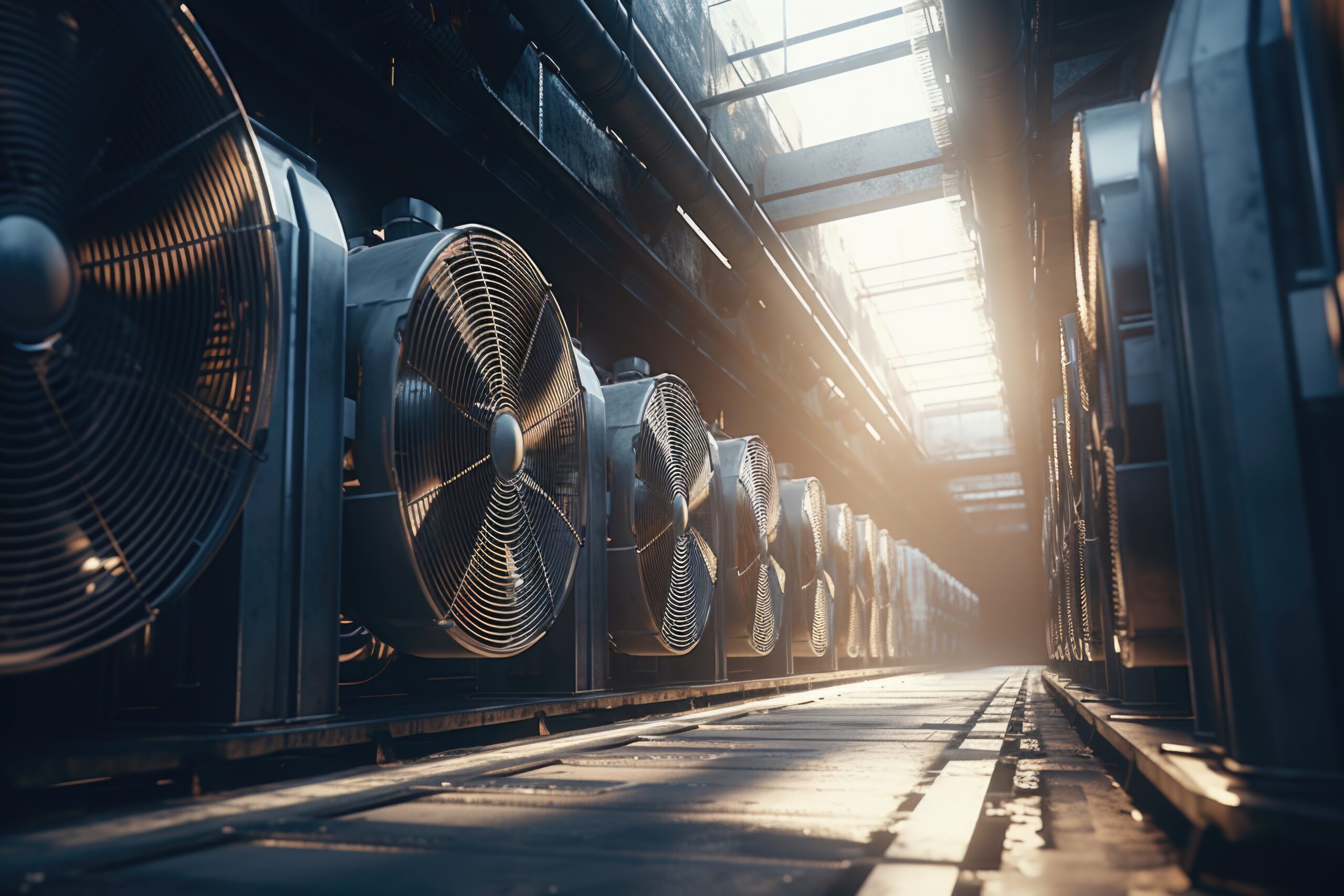
Free cooling is a cooling technique that uses outside air to dissipate the heat generated by data center equipment, eliminating or reducing the need for traditional mechanical cooling systems. The basic principle is to take advantage of favorable weather conditions, especially when the external temperature is below the desired temperature inside the data center.
The first step involves capturing external air, typically from the environment surrounding the data center. This air is considered “cold” compared to the internal temperature of the data center. Before entering the data center, external air goes through a filtration process to remove particles, dust and other contaminants. Depending on climatic conditions, it may be necessary to adopt additional measures, such as humidification or dehumidification, to optimize environmental conditions.
In some situations, free cooling is implemented in conjunction with traditional cooling systems, such as air conditioning units. This allows for a hybrid approach, where free cooling is used whenever external conditions are appropriate, and traditional systems come into play only if necessary.
By adopting free cooling, data centers significantly reduce energy consumption associated with cooling, resulting in economic and environmental benefits. This strategy is particularly effective in regions with favorable climates, where external temperatures are suitable for heat dissipation without the need for conventional mechanical refrigeration systems.